
Vellichor.

I’ve been too raw lately to write for sharing.
The past few months have been enduring — painful and exhausting — and yet, somehow, a time of quiet practice: endurance, healing, and the slow, imperfect work of unconditional love.
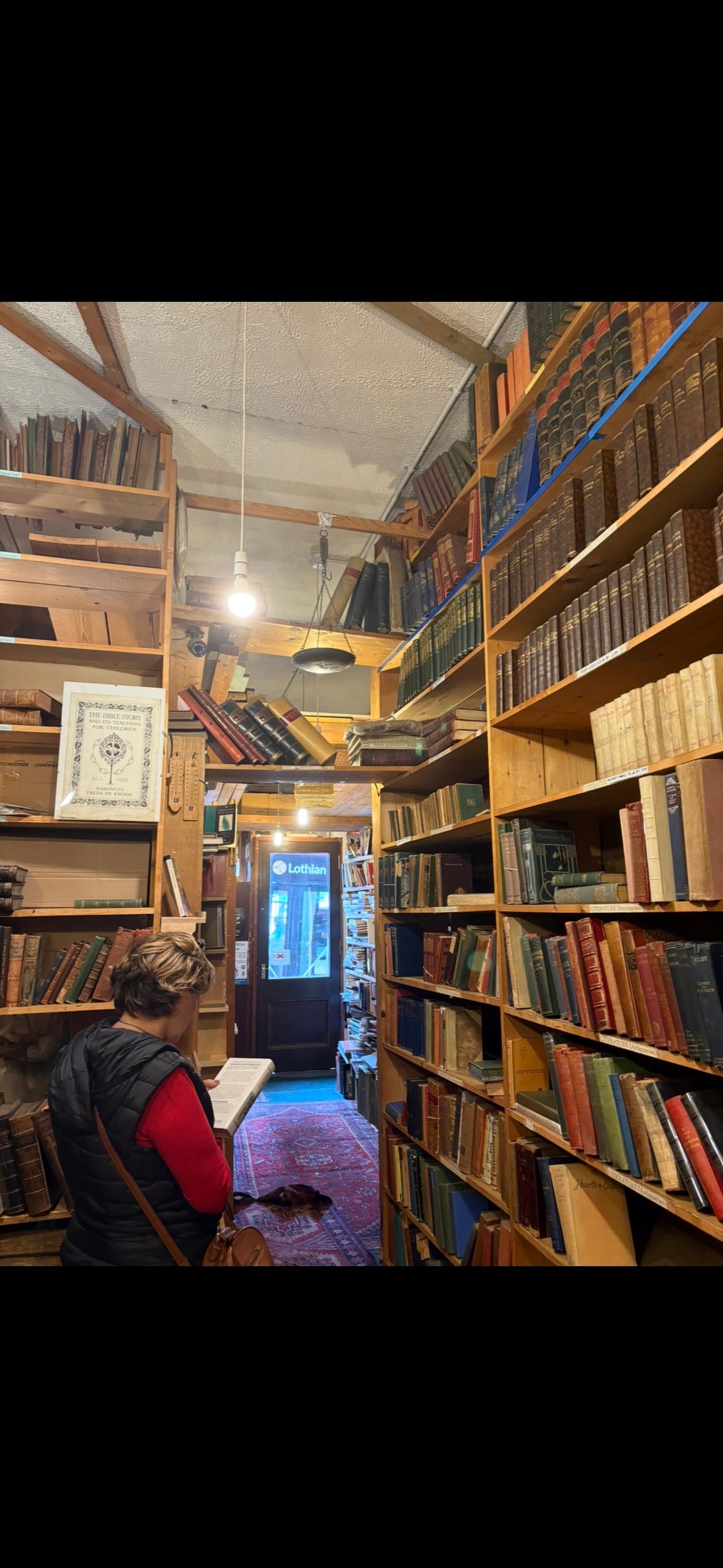
After a recent neurological appointment, I found myself walking through the Meadows in Edinburgh. The air was cool, the trees turning, and something about that stretch of open green with autumnal hues, seemed to breathe for me when I couldn’t. I wandered aimlessly until I reached a small second-hand bookshop, the kind that seems to hum with the weight of time.
Inside, the air smelled of dust and paper and something older than both. I could have stayed there all day. There’s a reverence in those quiet aisles, a sense that every book holds a story beyond what’s written, carrying the fingerprints of other hands, other hearts.
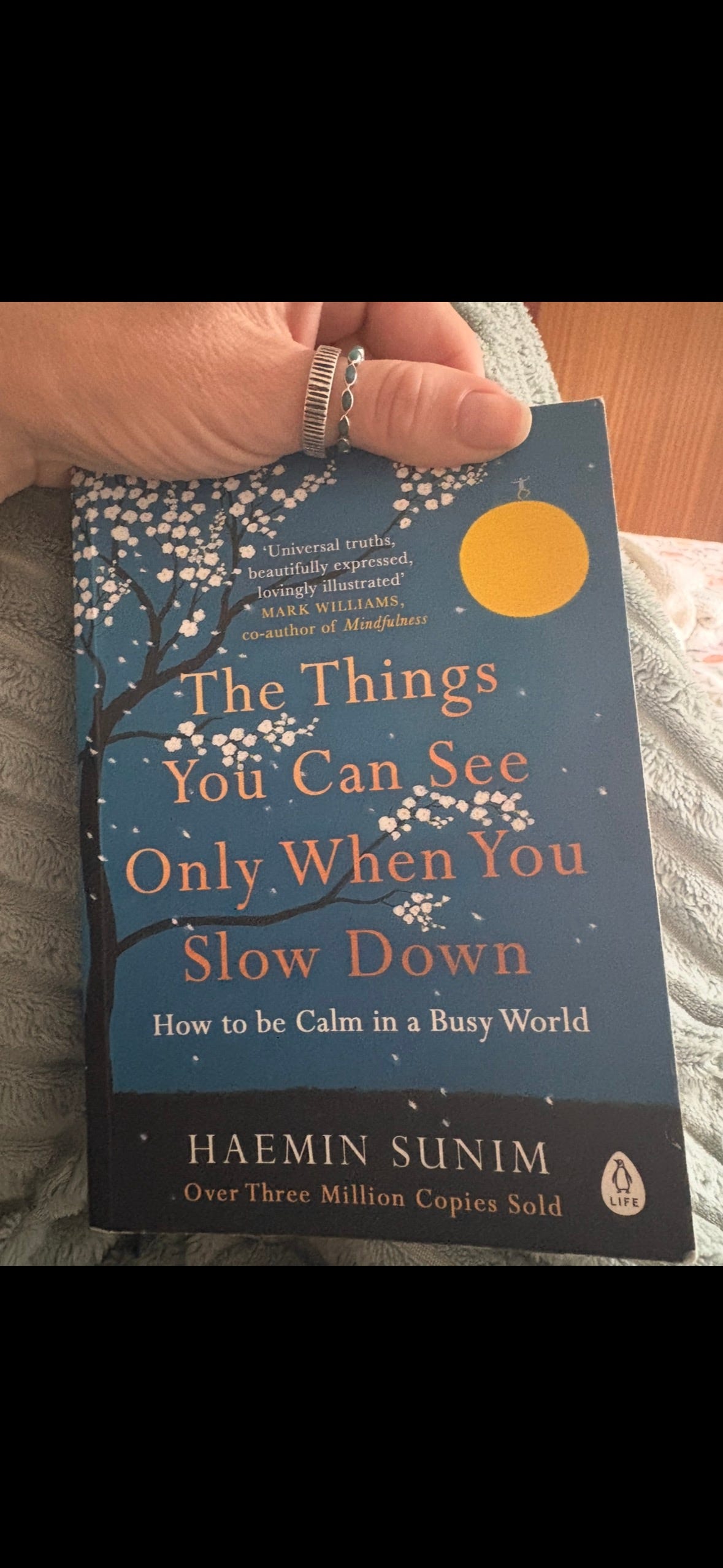
I left with The Catcher in the Rye (an old favourite), its companion study guide, and The Things You Can See When You Slow Down. I had entered busy of mind, overwhelmed by all I couldn’t fix — and left with a sense of peace that didn’t need to explain itself.
That soft ache that always finds me in places like this — it has a name: vellichor. The wistfulness of old bookshops, the longing for stories we’ve never lived but somehow remember. Maybe that’s why I love them so much. They mirror something in me — the way I collect fragments of people and moments, holding onto them like lines I might need to reread one day.
Standing there, surrounded by stories that have already been loved, I thought: maybe we’re all a bit like second-hand books. Worn by time, softened by touch, carrying the marks of where we’ve been. And maybe our beauty isn’t in being new or unmarked, but in being read — and still worth returning to.
I didn’t know it that day, standing in that Edinburgh bookshop, but I think I was being reminded of something simple: when life feels unreadable, go where stories have already survived the turning of many hands. They’ll teach you how to begin again.